
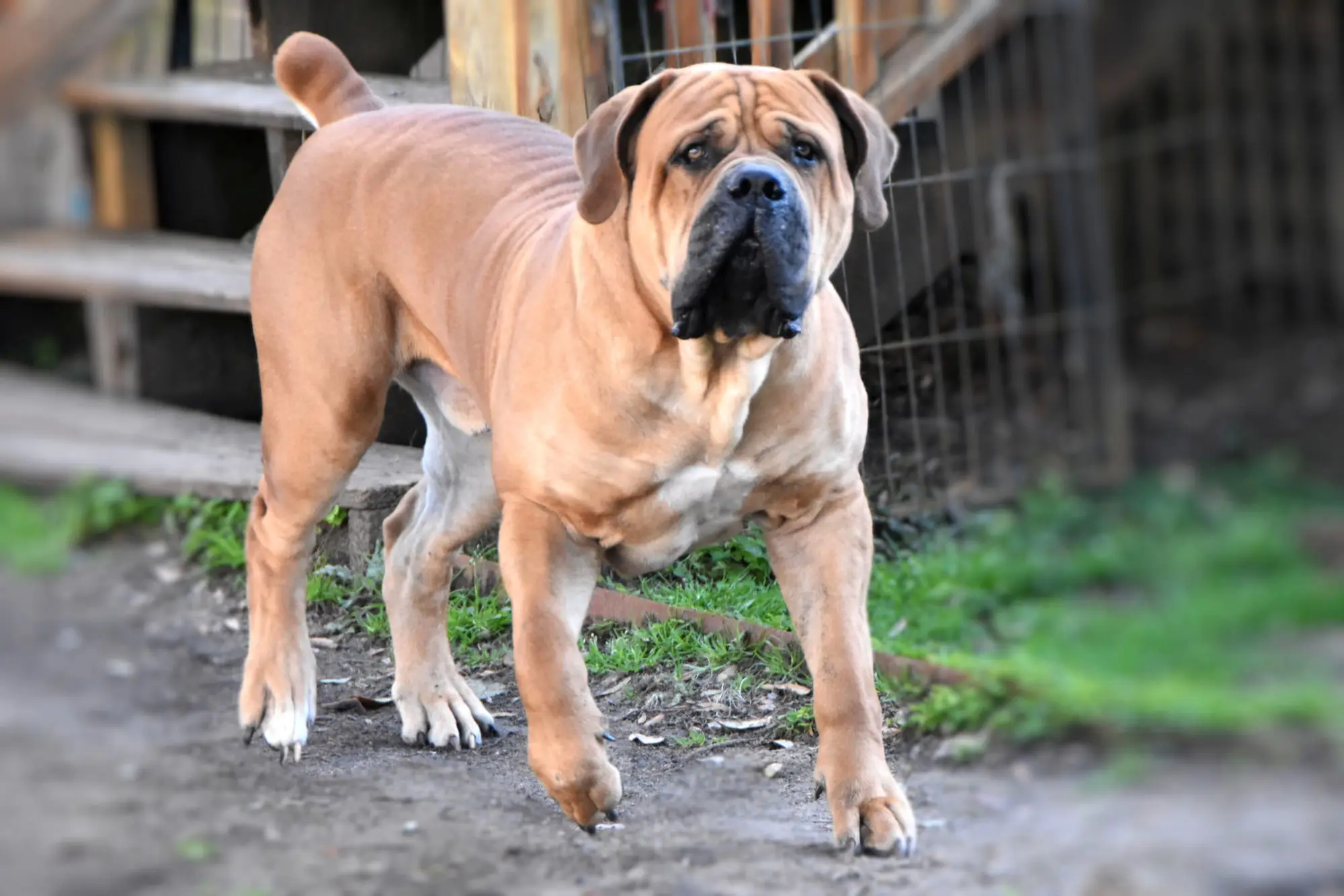
Is this actually your dog?
The South African Boerboel was bred on remote farms to guard a homestead alone, decide for itself what was a threat, and be big enough to settle the argument. Every good thing about the breed and every hard thing about it comes from that one sentence.
A Boerboel is probably right for you if:
- You want a genuine family guardian, not an accessory.
- You are home a lot, or somebody is. They do badly left alone all day.
- You have secure fencing and a house with room to move.
- You are comfortable being the one in charge, calmly and consistently.
- You can afford a large-breed dog, including the vet bills.
It is probably the wrong dog if:
- You have never spent much time around big, strong-willed dogs.
- You want something that will be friendly to every stranger on sight.
- Nobody is home between 7am and 6pm.
- Your fencing is a suggestion rather than a barrier.
- You'd struggle to physically manage a 160–200 lb animal on a lead.
We would rather talk you out of a Boerboel today than take one back at eighteen months. If any of the second list describes you, tell us — we will say so honestly, and we'll still be friendly about it.
Size and growth
Boerboels are a giant breed with a slow, long growth curve. They are not finished at a year. Males keep filling out through the chest and head until around three.
Watch a Boerboel grow up
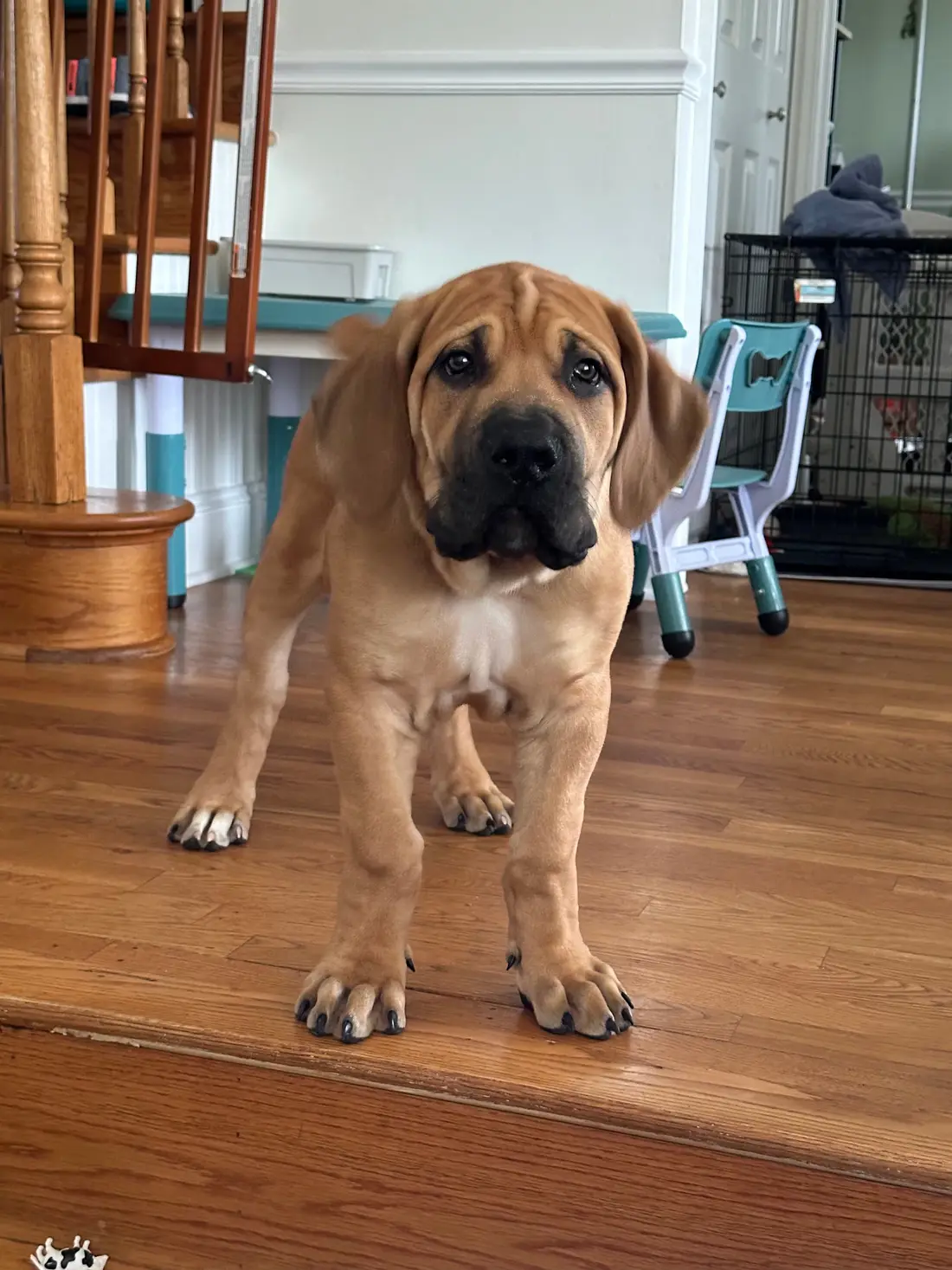
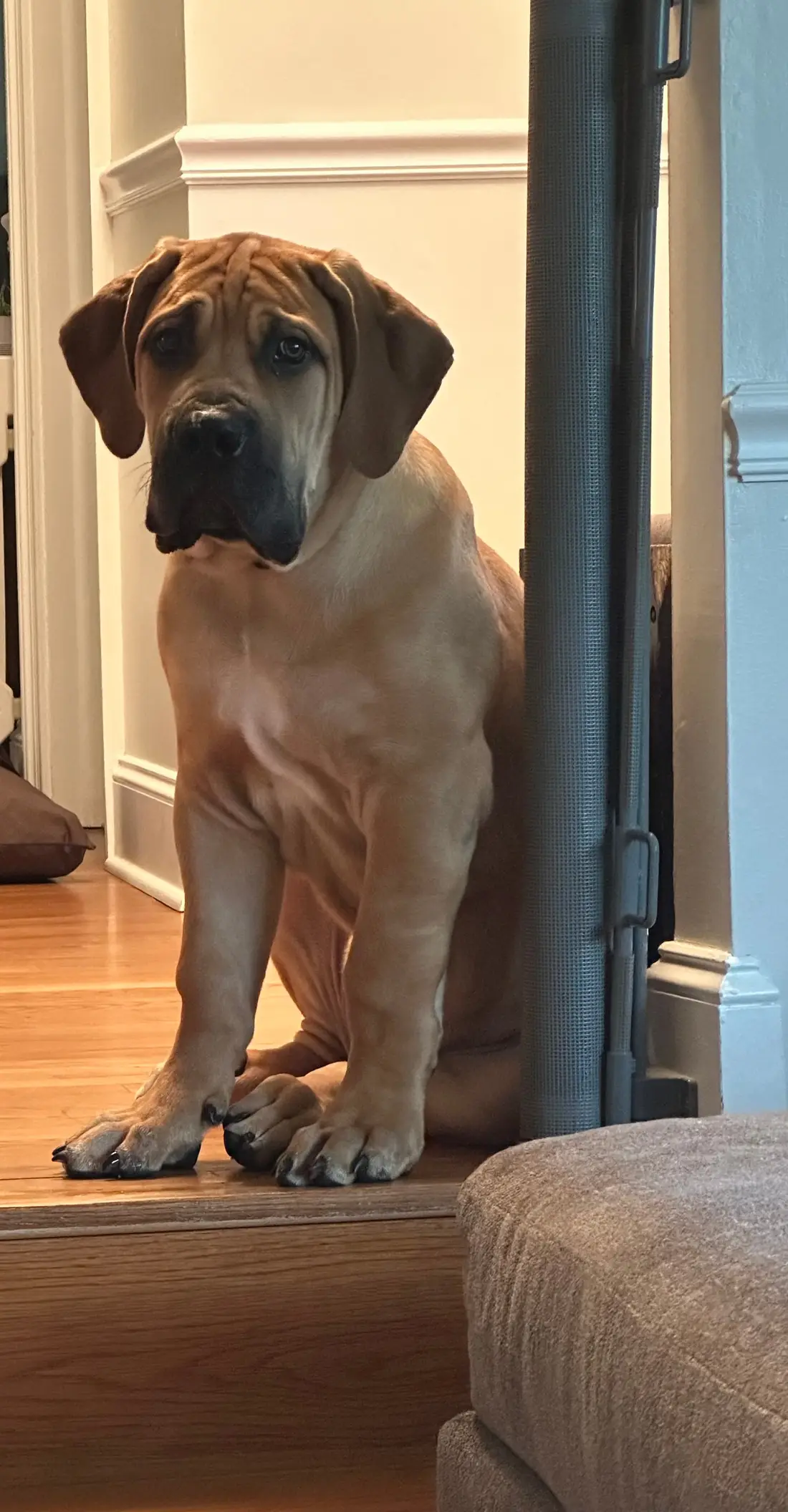
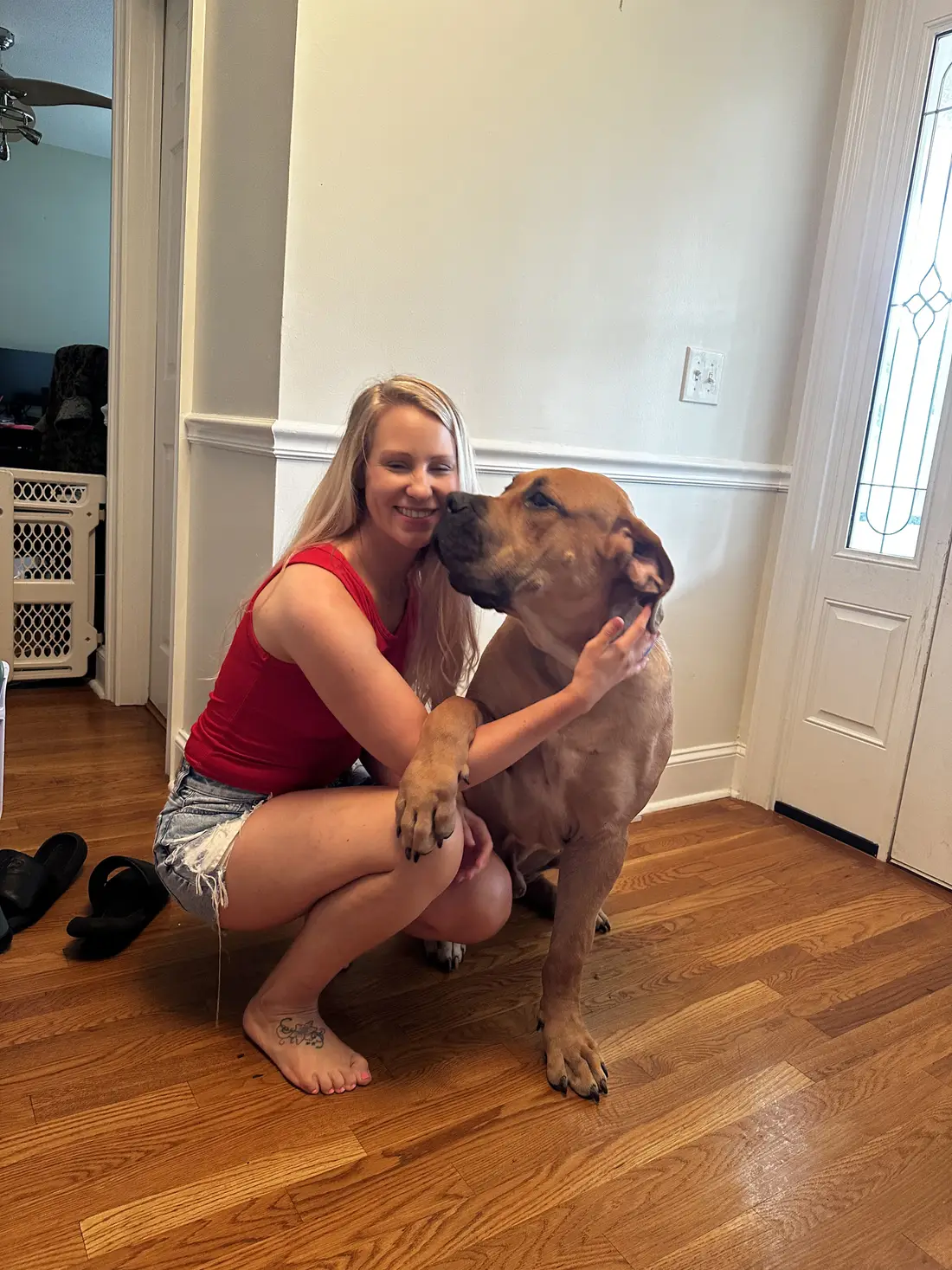
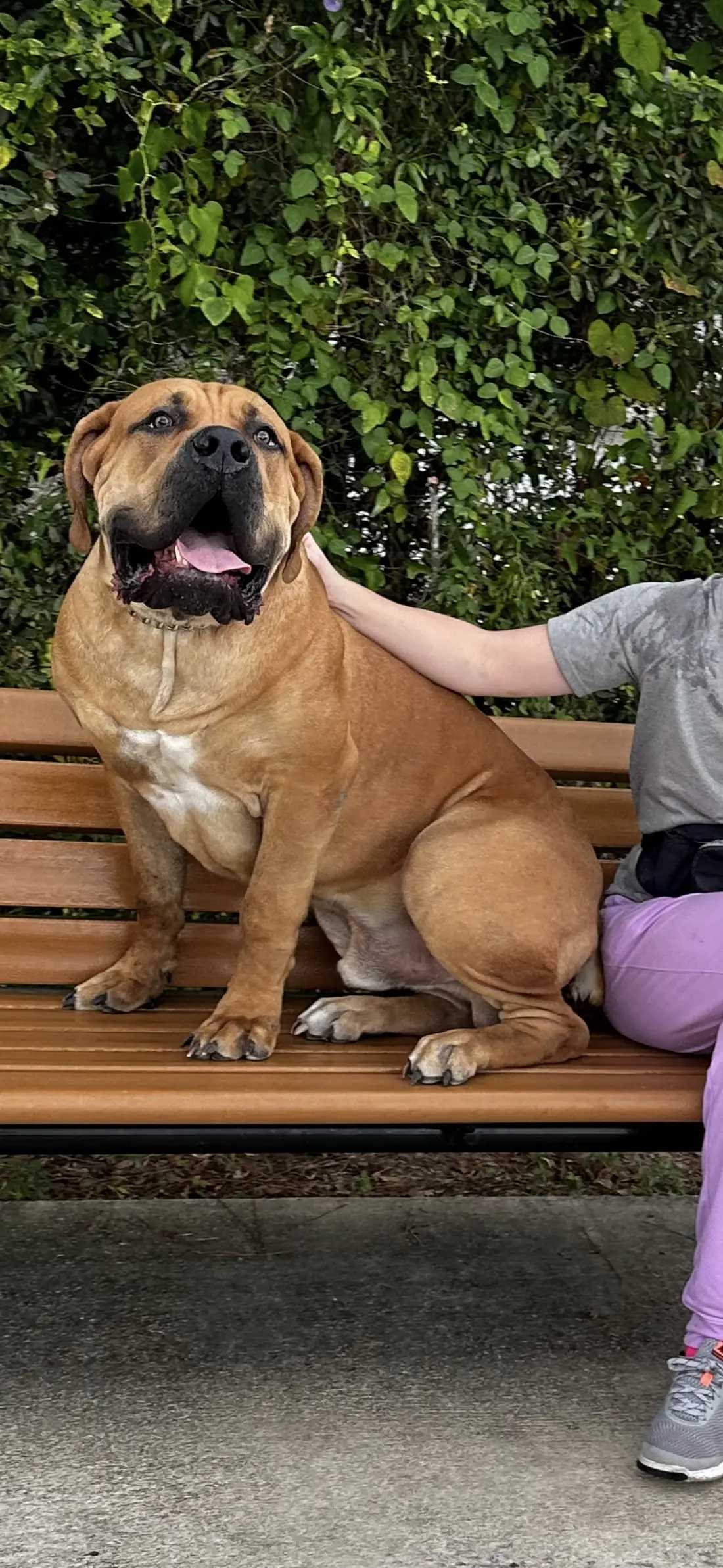
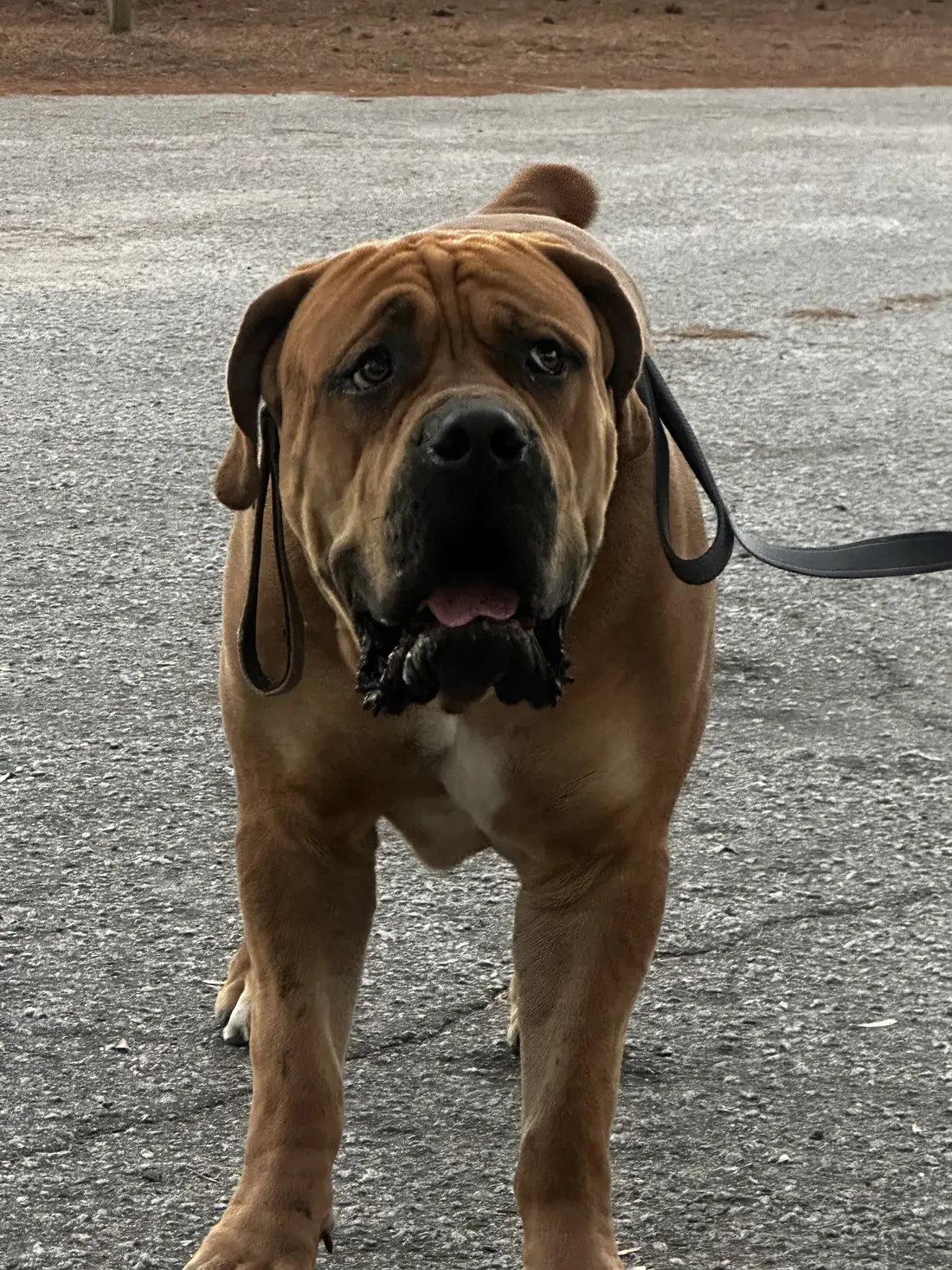
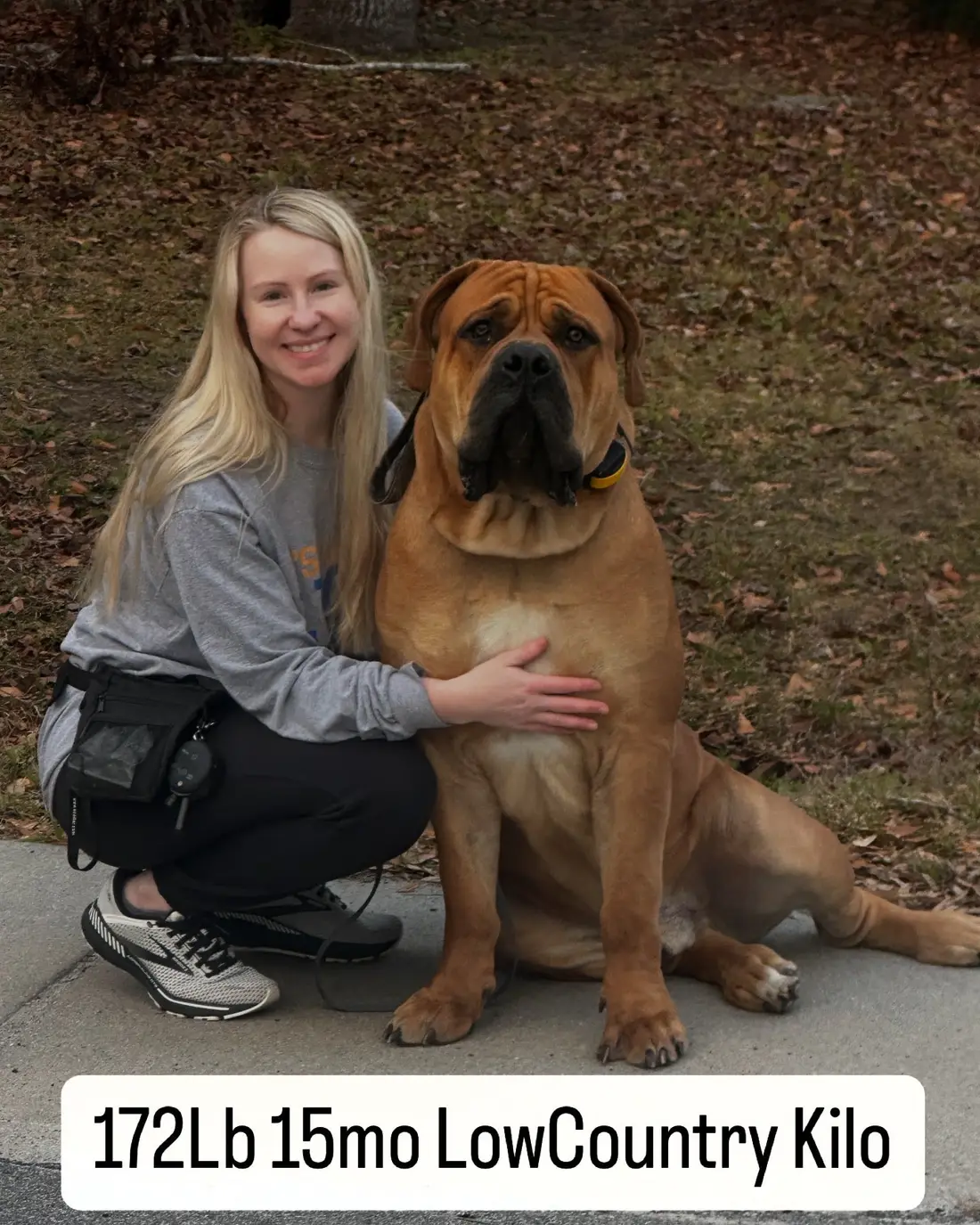
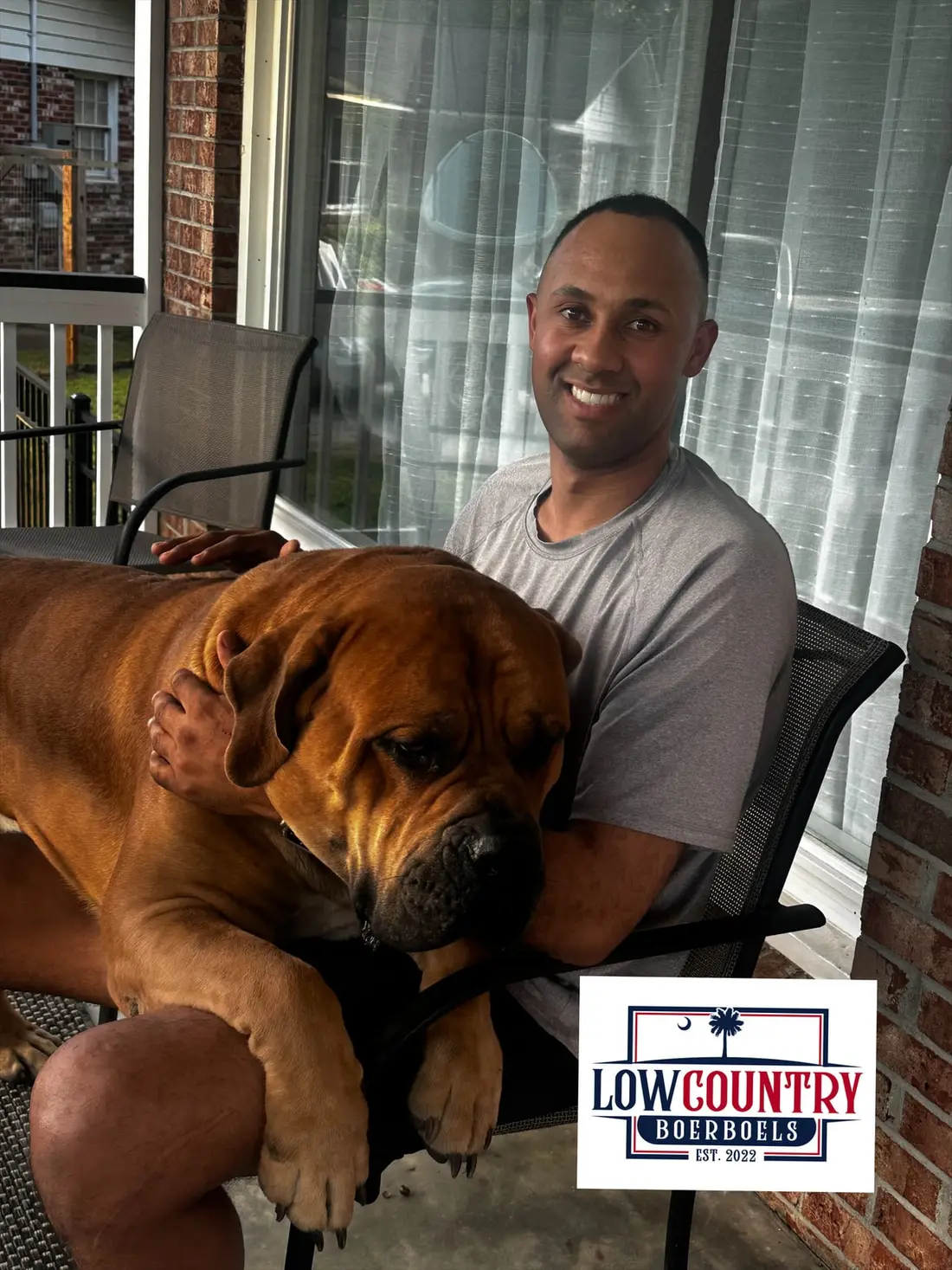
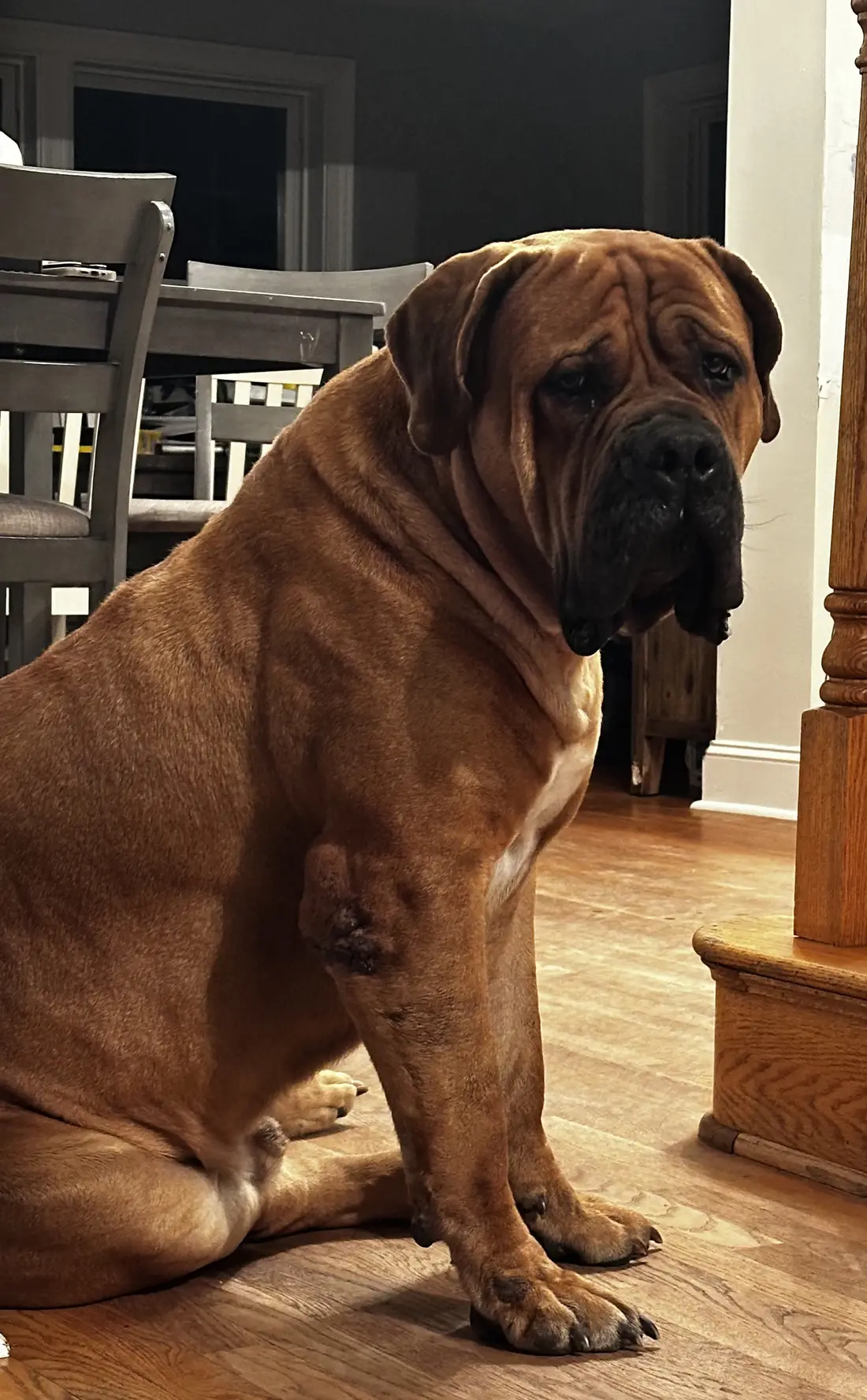
Every age here is measured from Kilo's own date of birth on his NABBR certificate. Nothing on this slider is an estimate.
| Age | Typical male | What matters at this stage |
|---|---|---|
| 8 weeks | 15–25 lb | Socialisation window. Meet everything, safely. |
| 6 months | 80–110 lb | Growth-plate care: no forced running, no stairs drilling, no jumping down from height. |
| 12 months | 120–150 lb | Adolescent testing. Be consistent; don't start negotiating now. |
| 2 years | 150–190 lb | Physically adult, mentally not quite. Guarding instinct settles in. |
| 3 years + | 160–200+ lb | Fully mature. Head and chest finish last. |
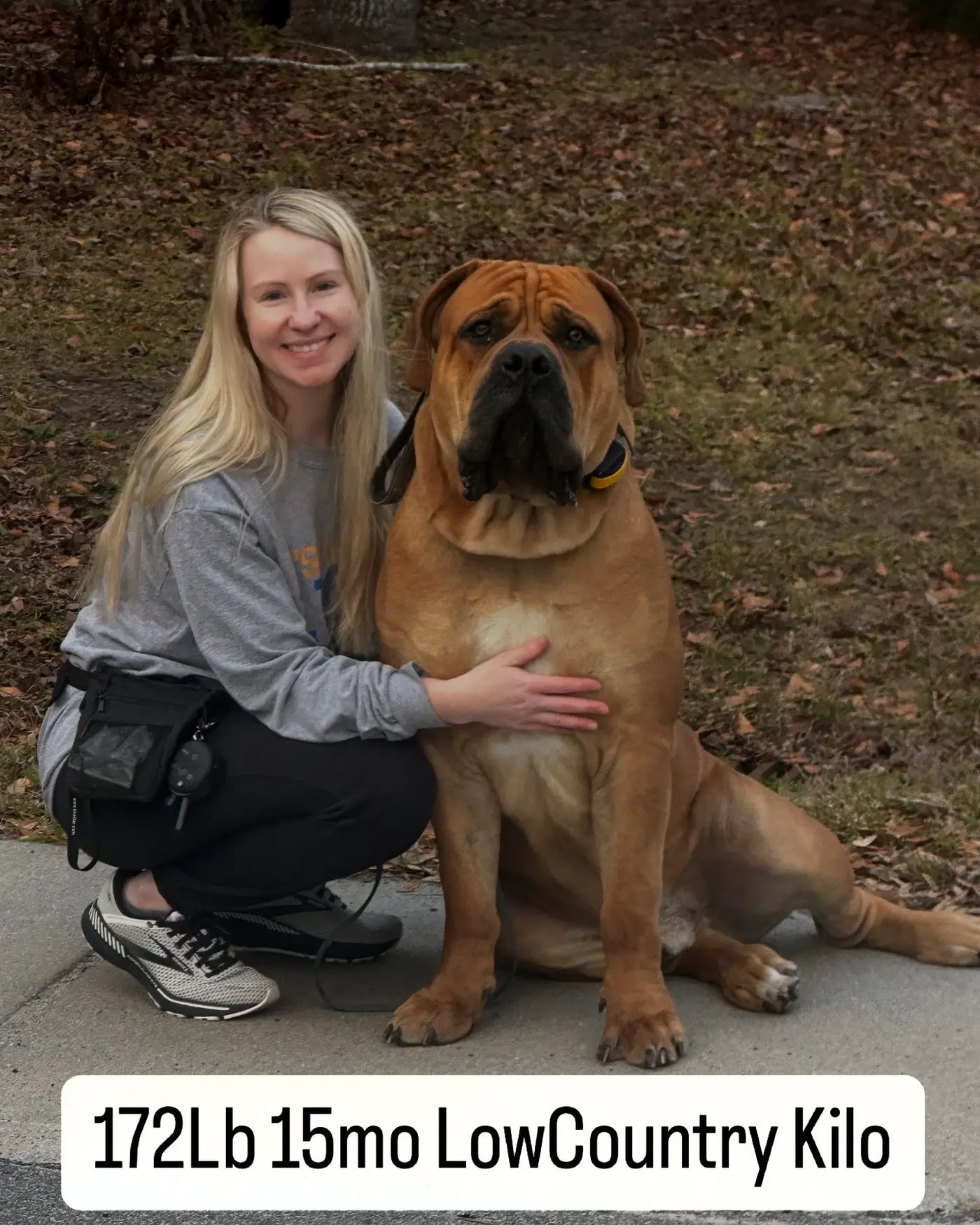
Females typically run 110–160 lb. Our own Kilo weighed 172 lb at fifteen months and was not done. Ranges are guidance, not targets — a lean Boerboel lives longer than a heavy one, every time.
Temperament
A correct Boerboel is confident, calm and discriminating. Not nervous, not frantic, and not indiscriminately friendly. With their own family they are absurdly affectionate — ours genuinely believe they are lap dogs, and they are not joking about it.
With strangers they are reserved until they've taken your measure. That is the breed working correctly. What you are looking for is a dog that assesses rather than one that reacts. Aggression toward a visitor who has been welcomed in by you is not breed character; it's a fault, and usually a handling failure.
They are notably tolerant with the children of their own household. That is never a reason to leave any dog of this size unsupervised with a small child — not because of temperament, but because of physics.
Training
Boerboels are intelligent and want to work with you, but they were bred to make their own decisions. If you are not clearly and calmly in charge, they will take the job themselves — and they are very good at it.
- Start at eight weeks. Everything you allow now you are agreeing to at 180 lb.
- Socialise hard and early. New people, surfaces, noises, vehicles, other dogs — calmly and often, through the first year.
- Lead work is non-negotiable. Teach loose-lead walking while you can still physically win the argument.
- Reward-based, not force-based. Heavy-handed correction on a guardian breed builds a defensive dog. Firmness is about consistency, not volume.
- Teach an off switch. A settle command and a crate or place they go to and relax will save you a hundred arguments.
Group obedience classes are worth it, less for the obedience than for the controlled exposure to other dogs and handlers.
Feeding
Your puppy goes home with a bag of exactly what it is already eating. If you want to change food, change it slowly over ten days — a quarter new for three days, then half, then three quarters. Abrupt switches cause the kind of week neither of you wants.
- A large- or giant-breed puppy formula, with controlled calcium. Standard puppy food grows them too fast and that damages joints.
- Split into three meals a day until about six months, then two. Never one large meal.
- Keep them lean through growth. You should feel ribs easily under a thin layer. A fat Boerboel puppy is a joint problem you are choosing.
- Raised bowls, and no hard exercise for an hour either side of a meal — bloat is a real risk in deep-chested breeds and it is an emergency.
Know the signs of bloat before you need them: a swollen, tight belly, unproductive retching, pacing and obvious distress. It kills quickly. Go to an emergency vet immediately — do not wait to see if it passes.
Exercise and space
Adults need about 45–60 minutes of real activity a day, plus a yard they can patrol. They are not a high-endurance breed and they are not built to be a running partner — but they do need a job and a perimeter.
Puppies are different. Until the growth plates close at roughly 18 months, keep it to free play on grass and short lead walks. The old rule of five minutes per month of age, twice a day, is a reasonable ceiling for structured walking. No jogging, no long hikes, no repetitive stair work, no jumping down out of the truck.
Fencing needs to be real: six feet, solid, and properly fixed. A bored Boerboel that decides the fence is the problem will be correct. Invisible fencing does not contain a guardian breed and does nothing to keep other people's dogs out.
Health and grooming
Grooming is mercifully simple. The coat is short and dense: a rubber curry brush once a week, a bath when they've found something. Wipe the facial folds and under the dewlap dry — damp skin folds get sore. Nails need trimming every few weeks; on a dog this heavy, long nails change how the foot loads.
What a large-breed vet will want to watch:
- Hips and elbows — keep them lean, keep puppy exercise sensible, and have them scored if you intend to breed.
- Bloat / GDV — see above. Some owners of giant breeds elect a preventative gastropexy at spay or neuter; discuss it with your vet.
- Ectropion / entropion — eyelid conformation. Worth a look at every check-up.
- Heat — this is South Carolina. A heavy dark dog overheats fast. Walk early or late, shade and water always, and never leave them in a vehicle.
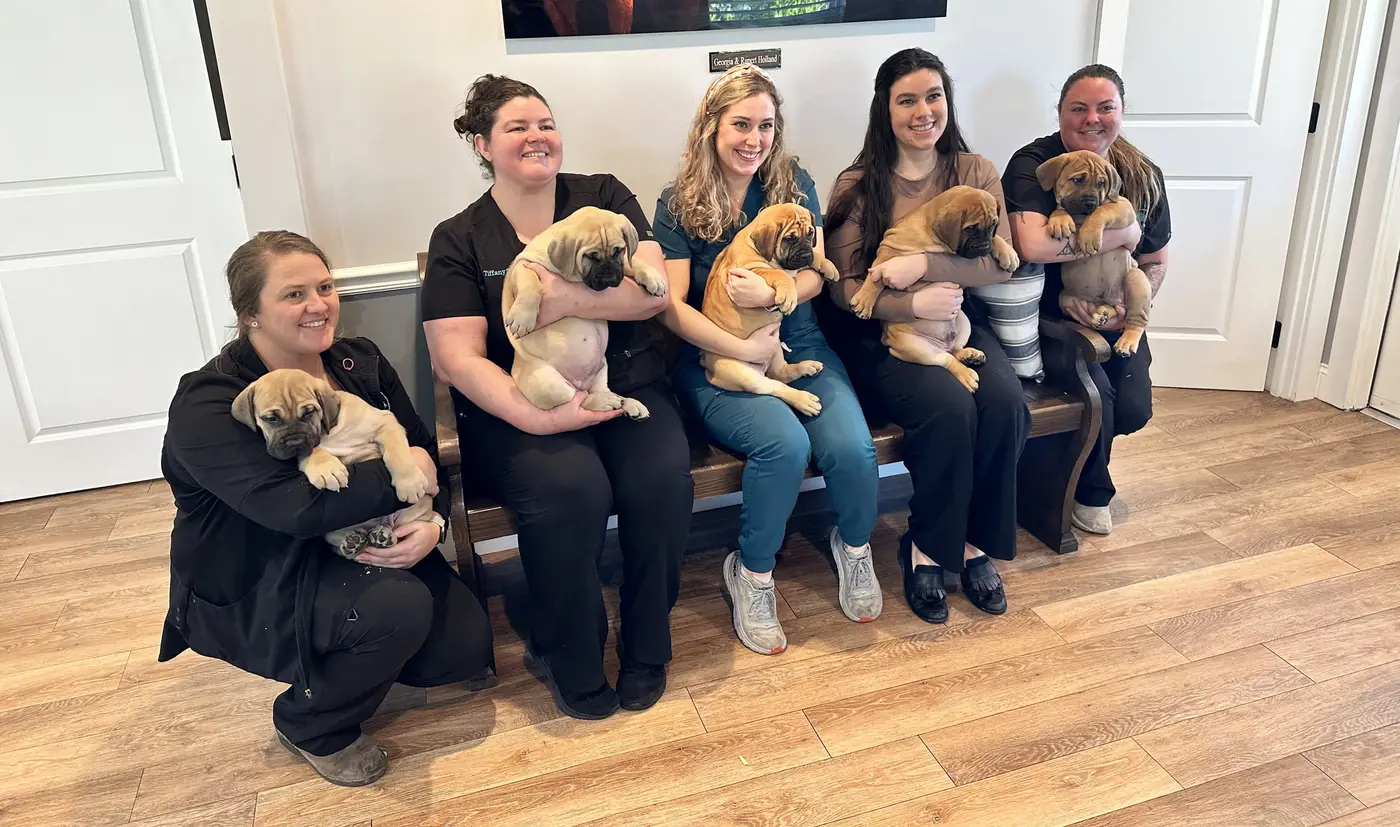
Life expectancy is roughly 9–11 years. Our own Narcos and Jesse are both in their ninth year and still structurally sound —you can see them here, which is more than most breeders will show you.
The first week at home
- Before pickup: crate, bed, two bowls, a 6 ft lead, a collar that fits now and a plan to replace it four times. Puppy-proof low cupboards and trailing cables.
- Day one: keep it quiet. No welcome party. Let them explore one or two rooms, show them where they sleep and where the garden is.
- Toileting: outside after every sleep, meal and play session, and every couple of hours besides. Praise heavily outdoors; never punish an accident indoors.
- Nights: crate next to your bed for the first week or two. Expect broken sleep. It passes faster if you don't move them onto your bed to solve it.
- Vet visit: within the first few days, with the paperwork we send you, so your own vet has a baseline and can schedule the next vaccinations.
- Register the microchip: the chip goes home registered, but confirm your contact details are on it. Five minutes now, enormous relief later.
And call us. Genuinely. First-week questions are the ones we most want to be asked, and there is no such thing as a stupid one at 2am with a crying puppy.
What it actually costs to run
Beyond the purchase price, budget honestly for a giant breed. Rough annual figures for a healthy adult:
| Item | Rough annual cost |
|---|---|
| Quality large-breed food | $900 – $1,600 |
| Routine vet, vaccinations, parasite control | $400 – $800 |
| Pet insurance (giant breed) | $600 – $1,200 |
| Training, equipment, replacement everything | $300 – $700 |
Figures are general guidance for a large-breed dog in the Southeast, not a quote. Emergency surgery on a dog this size runs into the thousands — which is the argument for insurance, and for keeping them lean.
Still deciding?
Get us on a FaceTime call. We'll put Kilo in front of the camera so you can see the size of him, show you Athena with her puppies, and answer whatever you want to ask. It tells you more in ten minutes than any page can, and nobody here will push you toward a deposit you aren't ready for.
The dogs live in our family home, so in-person visits are for families who have already placed a deposit.